Puerto Madryn
 |
| Argentine Sea |
The Argentine Sea is one of the world's largest seas, stretching from Rio de la Plata to the Magellan Strait at the tip of South America. It is relatively moderate in temperature. I should know, I swam in it.
 |
| Flag of Argentina with the Sun of May
For those of you who are interested in vexillology (a new word for most readers: the study of maps), there is much information available about Argentina's flag. Centred, is the Sun of May: from the Inca sun god, or from the May Revolution in 1810 when Argentina gained its independence from the Spanish Empire?
|
How does it differ from the Uruguayan flag? They are similar, yet different. This is all quite vexing. Sorry, I did not shoot the Uruguayan flag. You'll have to find it yourself.

 |
| At the Malvinas Heroes Monument we respectfully removed our hats. This we learned to do at the San Martin Mausoleum in Buenos Aires |
 |
| Playa Luis Piedrabuena (aka beach by the pier) |
I don't think I got the name of the beach right but that's where I had a quick dip, rather than a swim, because I don't like to swim around ships, especially the older ones that do not have holding tanks for you-know-what ...
Anyway, the water was warm. This is summer in Argentina, after all.
Today is Christmas Eve.
From the Marina's daily newspaper we read:
Sunny
High 85F/29C
Sunrise 5:39 am. Sunset 8:54 pm
The latitude is about 42 degrees South. The California/Oregon border is approximately the equivalent latitude in the Northern Hemisphere. I usually do not swim in the cold Pacific waters of Northern California. Even way south, the LA surfers wear shorty wetsuits. The warm Brazilian current warms these waters of the Argentine Sea. I did not expect to be able to swim in the Atlantic ocean off the coast of northern Patagonia, just 175 km north of the largest Magellan Penguin colony on the continent!
So what do we do on a hot Christmas Eve shore leave in Patagonia?
 |
| Mas Amor Por Favor Dress Shop |
Buy my wife a Christmas present. I had been procrastinating again.
1. An open credit card at the Mas Amor Por Favor (More Love Please) dress shop for little local blonde girls?
or
2. Buy her a whole selection of local Argentinian craft beers?
2. Buy her a whole selection of local Argentinian craft beers?
 |
| Antiguas Costumbres |
 |
| Beagle Beer |
 |
| Antares + Two |
 |
| Antares + Four |
 |
| Surprise Labels |
or
3. Offer her carte blanche at the local wine store for the best Argentinean wine on the shelf?
 |
| Descorche Vinoteca |


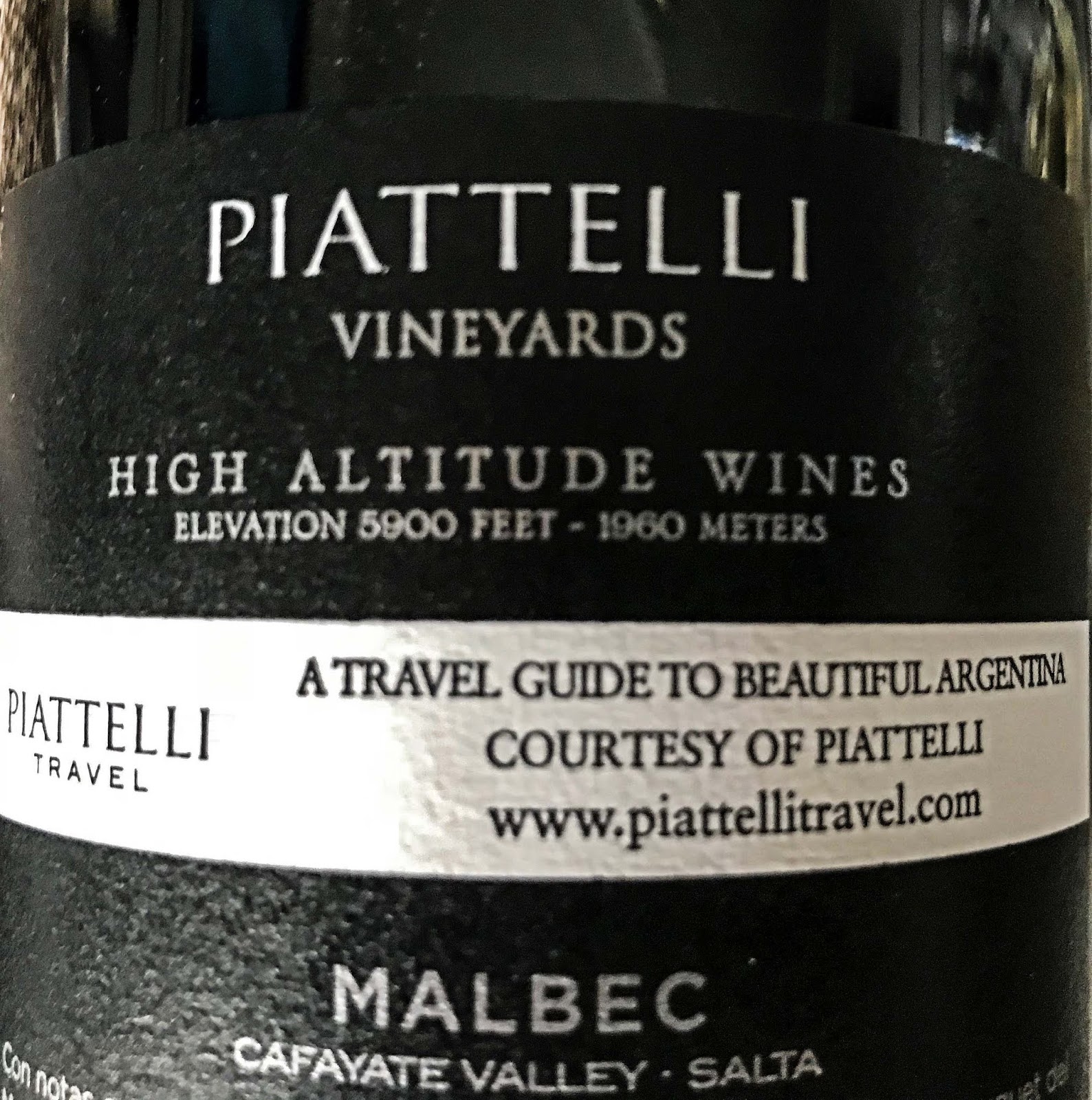
Piattelli is exported, though not this 2017 Reserve, I believe. High elevation vineyards? Don't know much about that but we trust our taste for wine. She has the glass at home now for the pretenders and for the memories.
 |
| Headless photographer. See gloves. |
(after 49.5 yrs of marriage who needs bigger gifts? Actually, the cruise was the gift - Christmas and Anniversary)
---------------------------------------------------------
 |
| the fingers of Punta del Este |
Speaking of fingers, I forgot to place the fingers on the right in the Punta del Este blog posting.
What? Look them up. I'm not going back. Gotta move on.
------------------------------------------------------------------------------
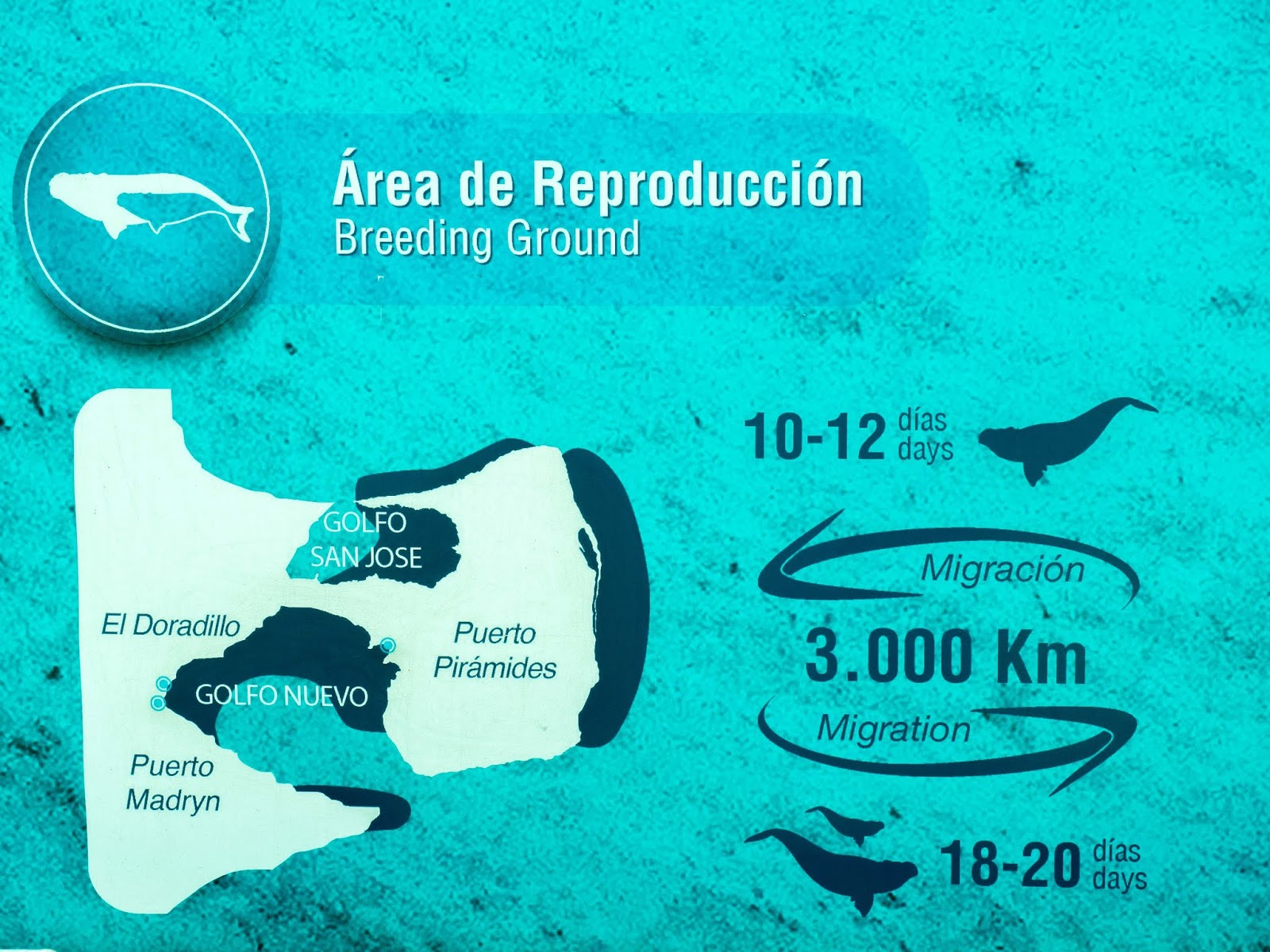
Little did we know that the waters around Puerto Madryn are the breeding grounds for the Southern Right Whale - the "Queen of the Patagonian Waters". We just missed them. They had left these waters in early December with their calves for the feeding grounds southeast of here - above the north coast of Antarctica.
 |
| One of several information panels at the whale interpretation centre |
Had we been here only a few weeks earlier we probably would have seen these very inquisitive mammals. We learned that all three species of the right whale are endangered. Here are their estimated numbers today:
1. Southern Right Whale - 10,000 - 12,000
2. Northern Right Whale - 450
3. Pacific Right Whale - less than 100 (near extinction)
I was a little surprised, and happy, to learn that all shipping traffic along the coast of Argentina must stay at least 50 miles from the coast, and reduce their speeds. This, to minimize danger and trauma to whales. Such rules now apply in most coastal countries.

World reduction in the whaling industry has reduced the harvesting of whales, their mortalities continue to with whale/ship collisions, noise pollution, fish nets, toxins, and more.
While on the subject of preservation of species, I must say that Argentina is certainly doing its bit. In fact, The government flexes its muscles on the Argentine Sea.
A small military type ship was berthed near our cruise ship. It was the coast guard, the Prefacto GC-28.
A small military type ship was berthed near our cruise ship. It was the coast guard, the Prefacto GC-28.

Argentina's coast guard is called the Prefectura or Prefecto. As with all national coast guard services, one of its major responsibilities is to protect its national waters from human piscivores, namely, poachers of its fish.
The images painted on cutter's upper starboard bulkhead really caught my eye. (zoom in please) What is that fleet of 20 ships? What's with the mad gun-toting shark?
 |
| Prefecto Derbes GC-28 - Coast Guard cutter |
I asked these questions of the local wharfinger. He had little English and I, little Spanish. We engaged in a sort of pantomime to extract information and meaning but alas, all the gesticulations, grunting, ahh-ing and umm-ing, mouth breathing, and dancing about came to nought, except perhaps, some unexpected entertainment for passers-by.
After the last shrugging of shoulders I took some photographs. I did sense that the Argentinian was proud that I did.

This is what I learned when we got home:
The scary anchor-riding shark with the automatic rifle is the coat of arms of this cutter. The crown of stars probably represents successful engagements with the shark's prey.
The boats on the wall are fish boats, most of them Chinese. What they all have in common is that they were caught fishing in Argentine waters by the Prefacto GC-28 - not a good thing. In some cases the interlopers were scared off, escaping into international waters. Some, however, were not so lucky.
The pictures of the boats on the GC-28's bragging wall represent engagements, or "kills" (by the nasty shark?), just like we used to see on the fuselage of WWll fighter planes.
The name of each ship and the date on interception is indicated.
Of particular note is the LU YAN YUAN YU 010.

From Wikipedia: It was sunk on 15 March 2016 off the coast of Argentina by the Argentine Coast Guard during a territorial fishing dispute. There were no fatalities. According to trade sources, the ship had been involved in disputes over fishing rights before.
(There is more juicy information about the incident than this).
(There is more juicy information about the incident than this).
Don't mess with the Argentine Prefectura!
...ooo0ooo...


